The Workstation Blog
All Posts
Hands-on guides to AI infrastructure, MLOps, models, and shipping to production.
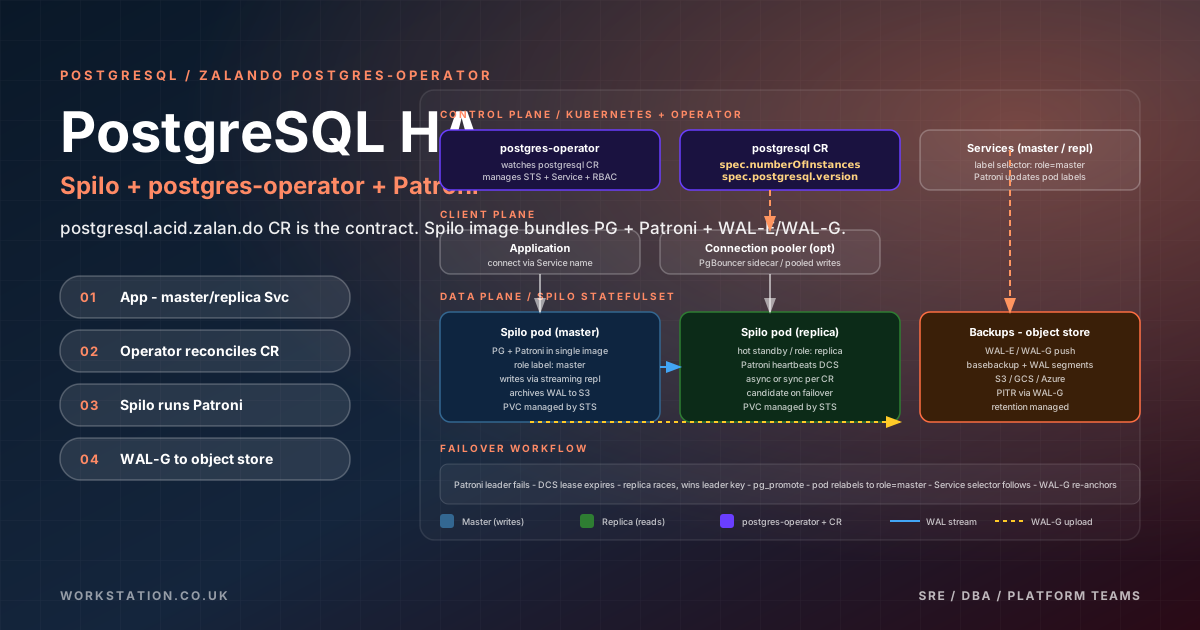
PostgreSQL High Availability with Zalando Postgres Operator: Multi-Cloud Kubernetes Deployment Guide
Complete guide to deploying highly available PostgreSQL clusters using the Zalando Postgres Operator on Kubernetes across AWS EKS, Azure AKS, Google GKE, and bare metal k3s with Rancher.
 WorkstationRead
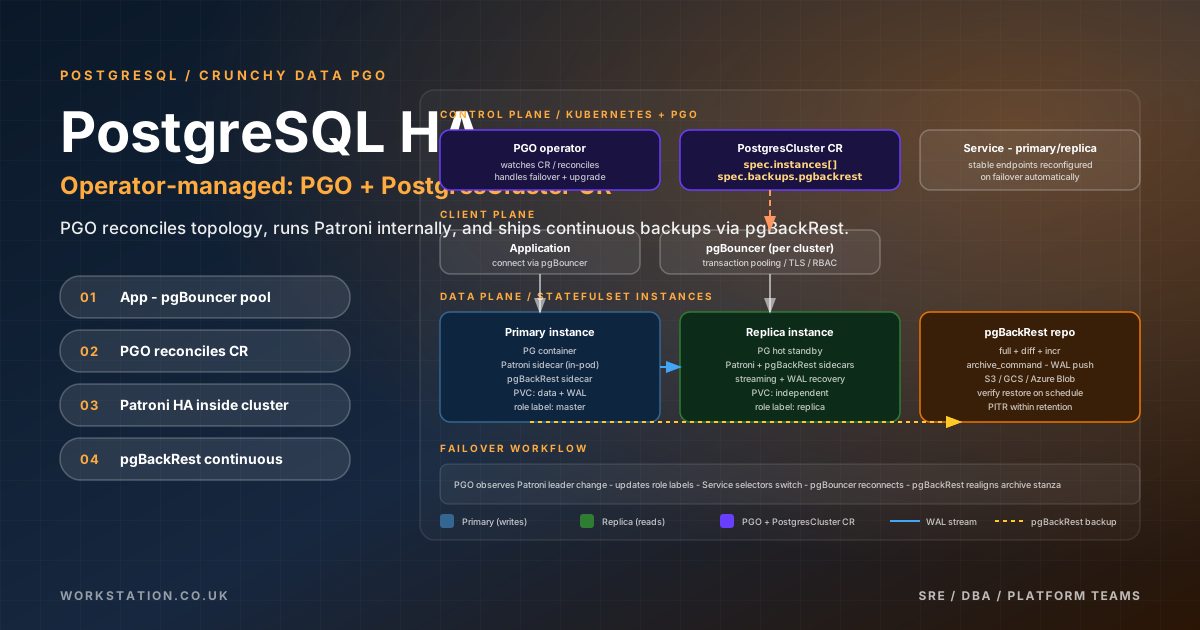
PostgreSQL High Availability with Crunchy Data PGO: Enterprise Kubernetes Deployment
Production guide for deploying highly available PostgreSQL using Crunchy Data PGO (Postgres Operator) across AWS, Azure, GCP, and bare metal k3s/Rancher with comprehensive backup, monitoring, and multi-region strategies.
WorkstationRead 
Polyglot Benchmarks: Choosing the Right Tool for the Right Job
Stop default-stack bias. Polyglot Benchmarks compares njs, Lua, Python, Go, Rust, Bun, Java, and Kotlin on the same workloads — reproducible harness + live dashboard for architecture decisions.
WorkstationRead 

OpenClaw AI: Open-Source Robotics on Apple Silicon
Discover OpenClaw, the open-source robotics framework that leverages Apple Silicon and MLX to train robotic control policies locally on your Mac.
WorkstationRead 
NVIDIA AI Workstations: From DGX to Lenovo ThinkStation PGX
A comprehensive guide to NVIDIA-powered AI workstations including the DGX platform, Lenovo ThinkStation PGX with GB10, and how to select the right hardware for your AI workloads.
WorkstationRead 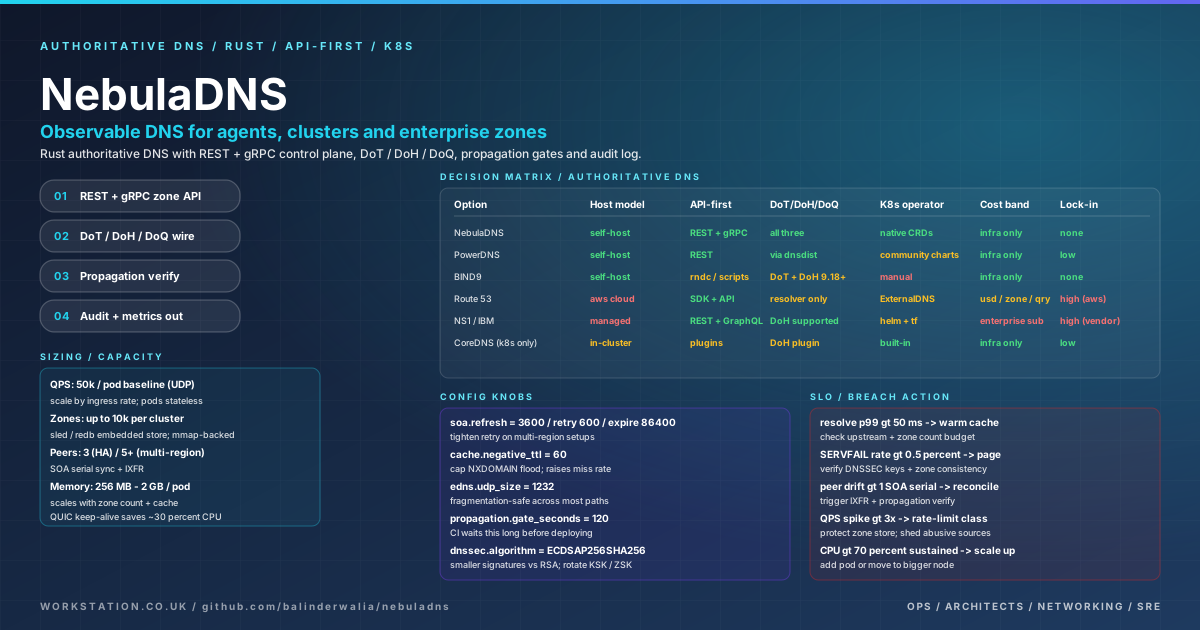
NebulaDNS: Why Authoritative DNS Is a Game Changer in the AI Era
NebulaDNS is a safe-Rust authoritative DNS server with an API-first control plane, Prometheus metrics, propagation gates, and Kubernetes-native operations—built for visibility when AI services and agents depend on DNS more than ever.
WorkstationRead NebulaDNS Complete Feature Guide: k3s, Route53, Observability, and Enterprise DNS
Complete tour of NebulaDNS features: API-first control plane, Prometheus metrics, propagation gates, peer fingerprinting, DNSSEC roadmap, Helm/k3s operator story, and how to integrate with AWS Route 53 and CoreDNS.
WorkstationRead 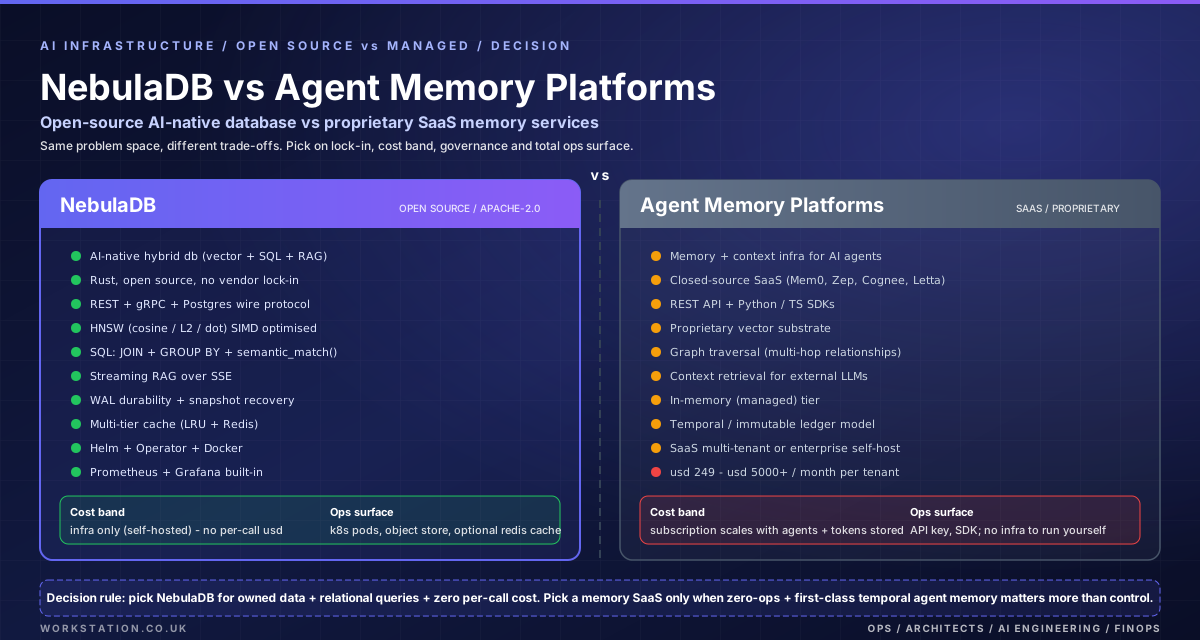
NebulaDB vs Agent Memory Platforms: Why Open-Source Wins
A comprehensive comparison of NebulaDB — an open-source AI-native hybrid database written in Rust — against the category of agent memory platforms. Discover why NebulaDB's multi-protocol architecture, SQL-native vector functions, and streaming RAG pipeline make it the superior choice for most AI workloads.
WorkstationRead 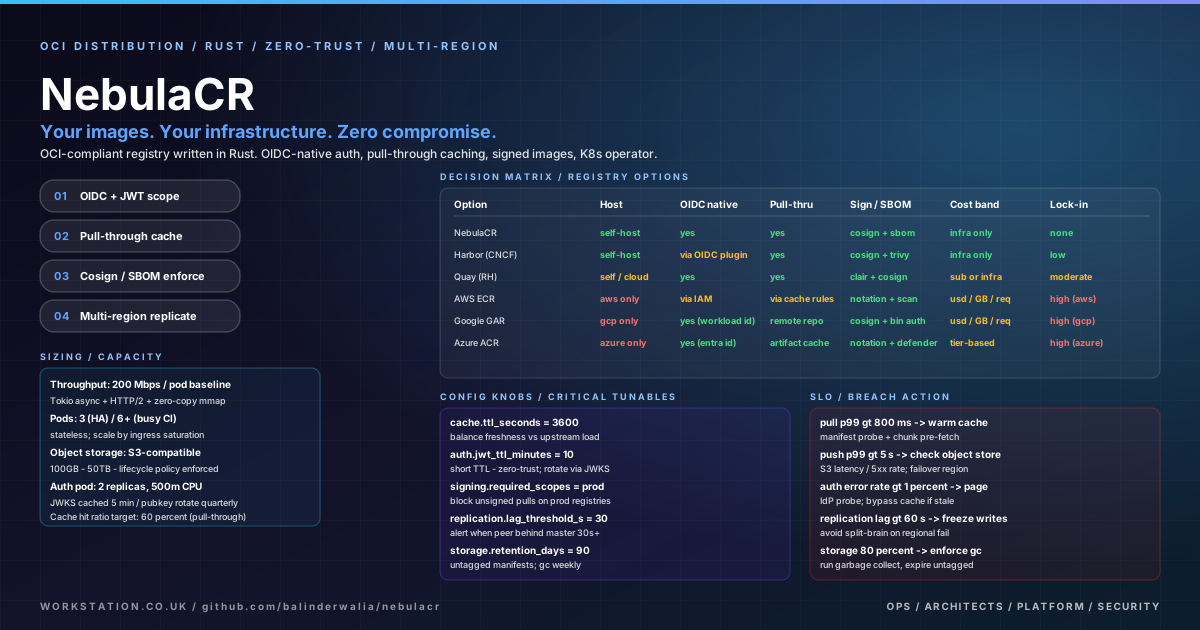
NebulaCR: Enterprise OCI Registry, Observability, and Compliance Without Compromise
Professional overview of NebulaCR: Rust OCI registry with nebula-registry and nebula-auth, zero-trust OIDC for humans and CI, SCIM lifecycle, Prometheus and OpenTelemetry, multi-region replication, pull-through cache, and Kubernetes Helm deployment—synthesised from the upstream docs/ and README.
WorkstationRead